
15 minute read Audio Available
Synopsis
Quiet: The Power of Introverts in a World That Can’t Stop Talking is a 2012 non-fiction book written by Susan Cain. Cain argues that modern Western culture misunderstands and undervalues the traits and capabilities of introverted people, leading to “a colossal waste of talent, energy, and happiness”
Who is this book for?
- Readers who are interested in persuasive and leadership oriented books.
- People who need to use persuasion to generate sales or inspire change.
- Anyone interested to learn how to use why to get desired results.
Meet the author
Susan Horowitz Cain (born 1968) is an American writer and lecturer, and author of the 2012 non-fiction book Quiet: The Power of Introverts in a World That Can’t Stop Talking, which argues that modern Western culture misunderstands and undervalues the traits and capabilities of introverted people. In 2015, Cain co-founded Quiet Revolution, a mission-based company with initiatives in the areas of children (parenting and education), lifestyle, and the workplace.
Quiet Summary
Be in command of the behaviors that make people like and respect you.
The ideal extrovert is a cultural evolution that developed around the turn of the twentieth century. A growth that changed who we are, who we look up to, our reactions at job interviews and the qualities we look for in employees. It also changed how we build relationships and raise our children. It was a shift from a culture of character to a culture of personality in America.
In the previous culture (culture of character), the ideal person was disciplined, honorable and serious. People’s behaviors in private mattered more than public impressions. The culture of personality brought about changes that made people focus on how others viewed them. People were focused on emulating performers to be like them. Industrialization in America influenced these changes.
There was growth in businesses, urbanization, and population in the cities. In this growing areas, the first impression made huge differences between relationships. People had cut ties in their jobs. They had moved from working with neighbors to working with strangers.
There was growth in self-presentation advice from advertisers to boost the public figure and reduce stage fright. The increase in self-image concerns led to the development of an inferiority complex that caused personal insecurities. People used it as an escape route whenever they failed in personal lives.
The society was working to reduce the introverted nature of people. Children were taken to school young to help them socialize and improve their social behaviors. The Self-help tradition is one of the most powerful lenses through which you can view the transformation of your character into a personality. Self-help literature has played a prominent role in America from as early as the 17th Century.
Beware of the myth of charismatic leadership and the culture of personality woven around it.
After the introduction of the culture of personality, development of an extroverted personality grew as it was a way of beating the crowd in a new secret and competitive society. Studies were done on the performances of the different characters in leadership.
The stores managed by extroverts had 16% higher weekly profits than those led by introverts. The results were, however, different for introverted leaders that worked with employees who actively improved work procedures. The stores had14% more profits than those led by extroverts.
In group works, introverted leaders were 20% more likely to accept suggestions which led to 24% better performance than extroverts. The success of the teams led by introverts were, however, dependent on the employees offering suggestions. When they did not provide support, the extroverts outperformed them by 22%.
The differences in performance are experienced because introverts are good at leading initiative-takers. They are also more likely to motivate their followers to be more effective. Extrovert leaders can be so focused on approving events that end up losing the followers’ good ideas along the way.
The extroverted leaders are likely to allow their workers to slip into passivity. The leaders do a lot of talking and very little listening. They are, however, advantageous when it comes to inspiring passive workers into performing. Understanding how to maximize the employees’ contributions is an essential skill for great leaders.
People who talk more are considered more intelligent than quitter people, but various tests and researchers show the view as very inaccurate. Speaking more does not necessarily correlate with greater insights or abilities to be more productive.
To maintain a definite goal, it is imperative that you sit and think.
Some interesting findings show that more creative people tend to be introverts with some interpersonal skills but not of the amicable people. These introverts were found to be independent in their activities. The study shows that in a group of very creative people in their lifetimes, there are a lot of introverts.
The findings do not necessarily show that introverts are always more creative than extroverts. They show that introverts are inclined towards creativity. An explanation for these findings is that, introverts like working independently. Their solitude fuels Their creativity. Introverts can concentrate their minds on the tasks at hand. Concentration prevents energy leaks at work.
From the findings that solitude is critical to the creativity of a person, most people are teaching their children to work independently. The New Groupthink is a phenomenon that has the potential to boost creativity among employees, but it consequently limits the skills that children could acquire to achieve success in the current world.
Groupthink tries to explain that creativity and success come through teamwork above everything else. The groupthink phenomenon is being taken up by many organizations. The aspect explains that two people are better than one, several people are more intelligent than one person. Most of the managers running current organizations believe that teams are the key to success in the competitive world.
The teams’ philosophy is influencing organizations to use open office plans instead of individual offices. Teams can work together either virtually or face-to-face. Face-to-face groups use team building retreats, meetings, and physical availability to boost their effectiveness and efficiency at the workplace.
The groupthink phenomenon is being introduced in schools for group learning. In most schools, students are encouraged to study and do assignments in the group. The method is becoming popular since students take ownership of their education when they learn from their peers. The techniques not only boost learning but also the students gain the skills of team culture that are crucial in corporate America.
Sign up or Login for the full summary
― Susan Cain, Quiet: The Power of Introverts in a World That Can’t Stop Talking
“There’s zero correlation between being the best talker and having the best ideas.”
What Is Snapreads?
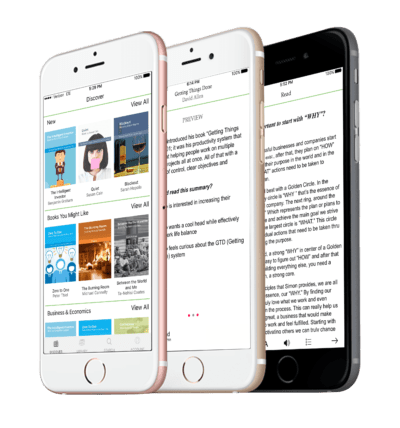
With the Snapreads app, you get the key insights from the best nonfiction books in minutes, not hours or days. Our experts transform these books into quick, memorable, easy-to-understand insights you can read when you have the time or listen to them on the go.
Book Summaries by Category
What to Read Next? Daring Greatly Summary