
15 minute read Audio Available
Synopsis
Being Mortal: Medicine and What Matters in the End is a non-fiction book by American surgeon Atul Gawande. The book addresses hospice care and the current state of care in regard to age-related frailty, serious illness and impending death.
Who is this book for?
- Readers who are interested in persuasive and leadership oriented books.
- People who need to use persuasion to generate sales or inspire change.
- Anyone interested to learn how to use why to get desired results.
Meet the author
Atul Gawande (born November 5, 1965) is an American surgeon, writer, and public health …. Being Mortal: Medicine and What Matters in the End was released in October 2014 and became a #1 New York Times bestseller.
Being Mortal Summary
The older we get, the more we worry if we will be able to take care of ourselves.
Everyone worries about getting old at some point. Will we be healthy? Will we have enough money to live comfortably?
But perhaps the biggest question you hear is: Will I still be able to take care of myself?
It has become the dominant concern about old age, but it wasn’t always the case. For most of our history, the elderly were taken care of by the younger generations.
Children would take care of their parents when they were no longer able to do it themselves. It was not seen as a burden by the children or as a humiliation by the parents.
Now, however, people are living significantly longer lives, and this has led to a paradigm shift in how we view aging.
In the modern world, people are living much longer, but they are still retiring at the same age, which means that they are dependent for a much longer time and therefore become a much more significant burden.
People are not only living longer though. They are also much healthier for much longer than they used to be.
It is no longer uncommon to see people in their seventies and eighties having active lives. It has led to the traditional family structure becoming something very different from what it used to be.
Where it used to be a place of safety for all generations, we now see a situation where power struggles occur instead. It is since different ages of adults must co-exist for much longer than would typically be the case.
All of these changes have created a situation where the elderly are no longer primarily worried about safety and security but instead about independence. It creates a problem though: If freedom is what gives our lives meaning, what will we do when we cannot be independent anymore?
We cannot control our lives forever. Eventually, we will face problems that we cannot control. This is nothing to be embarrassed about.
It is the most challenging thing about a life focused on independence and individuality: The realization that eventually it will fall apart. Nothing lasts forever, and freedom is no different. Focusing so much of our search for meaning on that independence is therefore potentially very dangerous. The advances in medicine and healthcare have created a world where people don’t only live longer, but they are also happier and healthier for longer.
As a result of this, we now find ourselves in the strange situation where dependence and weakness, which are the classic hallmarks of old age, are now viewed negatively and almost as an embarrassment.
It has also led to the traditional social structure breaking down to at least some extent. Societies have always taken a divide into different levels based on age.
The traditional village, for example, would have plenty of children and then progressively fewer people as we moved up through the age brackets. This structure would terminate in a small group of leaders or “Elders” who used their experience to advise and guide but did not take much active part in the daily life of the society.
These days, this structure has been almost wholly subverted. No longer do we have fewer people in each group as we move up. There are far more old people than there were before and they are far more active than they were as well. It has caused a trickle-down effect where every group in society suddenly has to adapt to an entirely new role in that society.
These changes have meant that the traditional social structure that we instinctively aim for has fallen apart almost entirely and this says that we are continually trying to find ourselves in the context of this new, unfamiliar social structure.
There is nothing wrong with depending on other people. Everyone has to get help from others sometimes.
The question of dependence has become the overriding concern of the elderly and aging. The fact that people can be independent for so much longer makes the fear of losing that independence so much more powerful.
The problem here is what doctors call “quality of life.” While medicine has progressed to a point where we can keep people alive, there is not yet a way of making sure that the life they have is a “good” life. It is where the fear of dependence comes in.
The elderly are not afraid of dying, but instead of living a life that they have no control over.
Imagine for a moment that you wake up one day, and you are no longer able to see. Suddenly you can’t drive anymore.
You can’t cook for yourself or watch a movie. You even struggle to walk. Now contrast that to the life you currently have.
It is the position that aging puts us in: The knowledge that any day could be the day where you effectively lose your free will.
Consider the real privilege of being able to decide to do something and then act on that decision. You decide you want a sandwich, so you get up and make a sandwich.
Now imagine deciding you want lunch but having to wait until someone is available to make that sandwich for you.
Understanding this fear is the key to understanding the plight of the elderly in the modern world and it is also the key to being able to provide the support and understanding that they need when the time comes for those fears to start becoming realities.
Sign up or Login for the full summary
“In the end, people don’t view their life as merely the average of all its moments—which, after all, is mostly nothing much plus some sleep. For human beings, life is meaningful because it is a story. A story has a sense of a whole, and its arc is determined by the significant moments, the ones where something happens. Measurements of people’s minute-by-minute levels of pleasure and pain miss this fundamental aspect of human existence. A seemingly happy life maybe empty. A seemingly difficult life may be devoted to a great cause. We have purposes larger than ourselves.”
― Atul Gawande, Being Mortal: Medicine and What Matters in the End
What Is Snapreads?
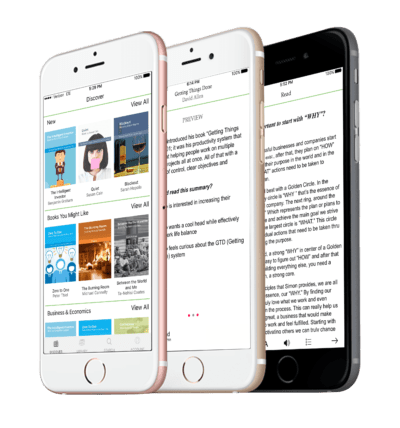
With the Snapreads app, you get the key insights from the best nonfiction books in minutes, not hours or days. Our experts transform these books into quick, memorable, easy-to-understand insights you can read when you have the time or listen to them on the go.
Book Summaries by Category
What to Read Next? Smarter Faster Better Summary